

What Is a Lumbar Herniated Disc?
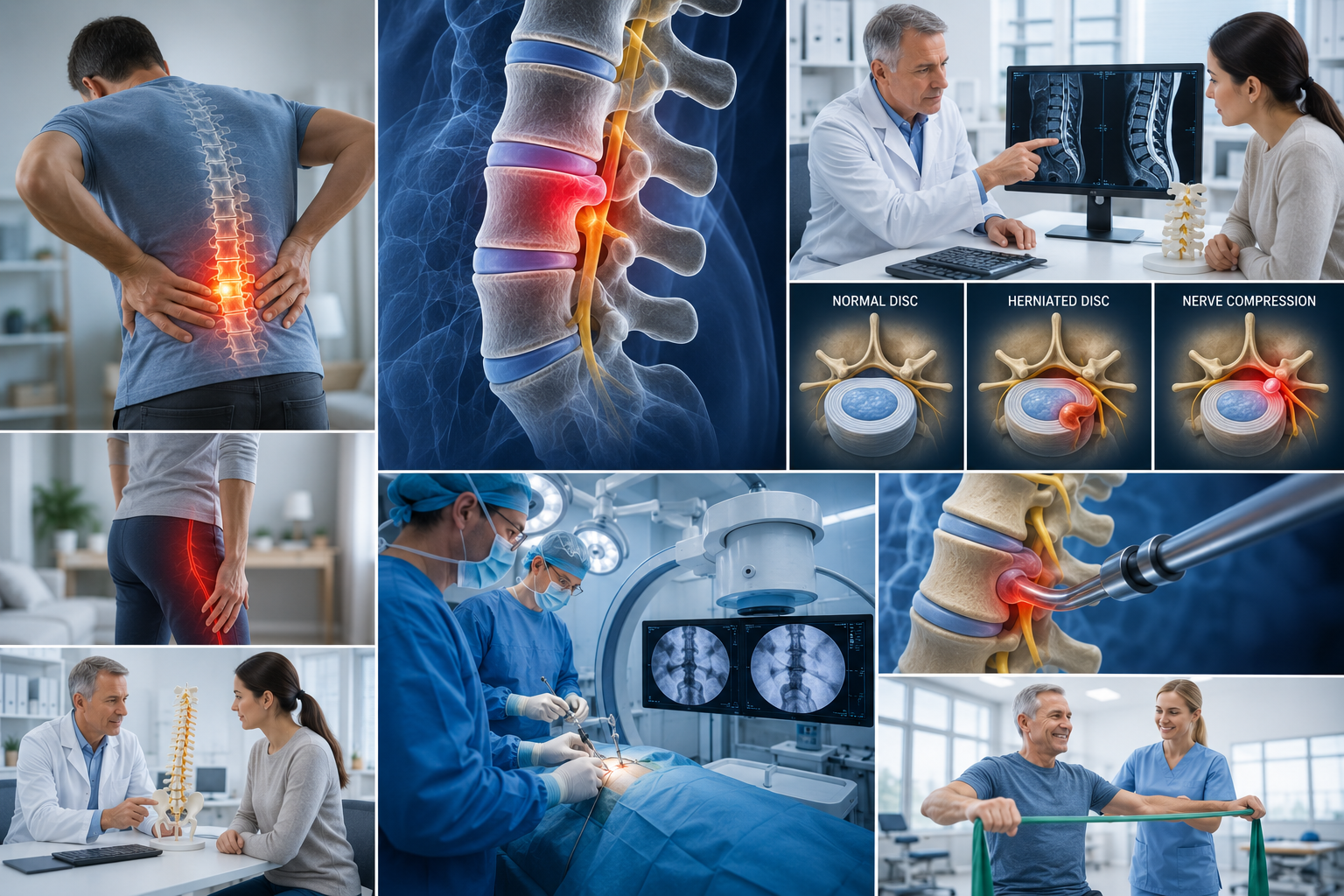
A lumbar herniated disc, often referred to as a slipped disc, ruptured disc, or prolapsed disc, occurs when the soft inner material of an intervertebral disc pushes through its outer layer and compresses nearby spinal nerves. This condition most commonly affects the lower back (lumbar spine) and is one of the leading causes of sciatica and nerve-related leg pain.
While many patients improve with conservative treatments, some experience persistent pain, neurological symptoms, or reduced mobility that significantly affect their quality of life. In these cases, lumbar herniated disc surgery may provide effective and lasting relief.
At WEGOVITA, international patients have access to Germany’s leading spine surgeons and specialized spinal centers, offering advanced surgical treatments for lumbar disc herniation using minimally invasive and state-of-the-art techniques.
Understanding Lumbar Disc Herniation
The spine is composed of vertebrae separated by intervertebral discs that act as shock absorbers. Each disc consists of:
- A soft inner core called the nucleus pulposus
- A tough outer layer called the annulus fibrosus
When the outer layer weakens or tears, the inner material may protrude into the spinal canal, placing pressure on nearby nerves.
This nerve compression often causes pain that extends beyond the lower back and radiates into the legs.
Causes of Lumbar Herniated Disc
Several factors can contribute to the development of a lumbar disc herniation, including:
- Age-related disc degeneration
- Repetitive heavy lifting
- Poor body mechanics
- Sudden twisting movements
- Sports injuries
- Obesity
- Sedentary lifestyle
- Genetic predisposition
- Occupational strain
Although disc herniation can occur at any age, it is most frequently diagnosed in adults between 30 and 60 years old.
Symptoms of a Lumbar Herniated Disc
Symptoms vary depending on the size and location of the herniation and the degree of nerve compression.
Common symptoms include:
Lower Back Pain
Pain may range from mild discomfort to severe and debilitating episodes that limit movement.
Sciatica
Sciatica is the most characteristic symptom of lumbar disc herniation. Pain radiates from the lower back through the buttock and down one leg, following the path of the compressed nerve.
Numbness and Tingling
Patients may experience abnormal sensations in the legs, feet, or toes.
Muscle Weakness
Compression of motor nerves can lead to weakness in the leg or foot, affecting walking and balance.
Reduced Mobility
Severe pain may interfere with everyday activities such as sitting, standing, walking, or sleeping.
Emergency Symptoms
In rare cases, a large disc herniation can cause cauda equina syndrome, a serious medical emergency characterized by:
- Loss of bladder control
- Loss of bowel control
- Numbness in the groin or saddle area
- Progressive leg weakness
Immediate surgical intervention is required in such situations.
When Is Surgery Recommended?
Many lumbar disc herniations improve with non-surgical treatments. However, surgery may be recommended when:
- Severe leg pain persists despite conservative treatment
- Symptoms continue for several weeks or months
- Significant nerve compression is present
- Muscle weakness develops
- Walking becomes increasingly difficult
- Quality of life is substantially affected
- Cauda equina syndrome occurs
The primary goal of surgery is to remove the pressure on the affected nerve and relieve symptoms while preserving spinal function.
Diagnostic Evaluation Before Surgery
German spine specialists perform a comprehensive assessment to accurately diagnose the condition and plan the most appropriate treatment.
Magnetic Resonance Imaging (MRI)
MRI is the gold standard for diagnosing lumbar disc herniation and provides detailed visualization of:
- Herniated disc material
- Nerve root compression
- Spinal canal anatomy
- Degenerative changes
Computed Tomography (CT)
CT scans may be used when additional evaluation of the bony structures is required.
Neurological Examination
Specialists assess:
- Muscle strength
- Reflexes
- Sensory function
- Walking ability
- Nerve involvement
These evaluations help determine the severity of nerve compression and guide surgical planning.
Diagnostic Evaluation Before Surgery
Germany is internationally recognized for advanced spinal surgery and minimally invasive treatment techniques.
Microdiscectomy
Microdiscectomy is considered the gold standard surgical procedure for lumbar disc herniation.
Using specialized microscopes and instruments, the surgeon removes the portion of the disc compressing the nerve while preserving surrounding tissues.
Benefits include:
- Excellent relief of leg pain
- High success rates
- Small incision
- Minimal tissue disruption
- Faster recovery compared to traditional surgery
Microdiscectomy is among the most frequently performed spinal procedures worldwide.
Revision Disc Surgery
In rare cases where symptoms recur after previous surgery, German spine surgeons offer advanced revision procedures tailored to the patient’s specific condition.
These complex surgeries require extensive expertise and careful planning to achieve optimal outcomes.
Minimally Invasive Lumbar Discectomy
Many German spine centers perform minimally invasive discectomy through very small incisions using advanced surgical equipment.
Potential advantages include:
- Less muscle damage
- Reduced postoperative pain
- Lower risk of infection
- Shorter hospital stay
- Faster return to daily activities
Patients are often able to mobilize within hours after surgery.
Endoscopic Spine Surgery
Selected patients may be candidates for endoscopic lumbar disc surgery.
This highly specialized technique uses a miniature camera and surgical instruments inserted through a small incision.
Benefits may include:
- Extremely small surgical access
- Minimal tissue trauma
- Rapid recovery
- Reduced postoperative discomfort
German spine specialists determine whether endoscopic surgery is appropriate based on the location and characteristics of the herniated disc.
Why Choose Germany for Lumbar Herniated Disc Surgery?
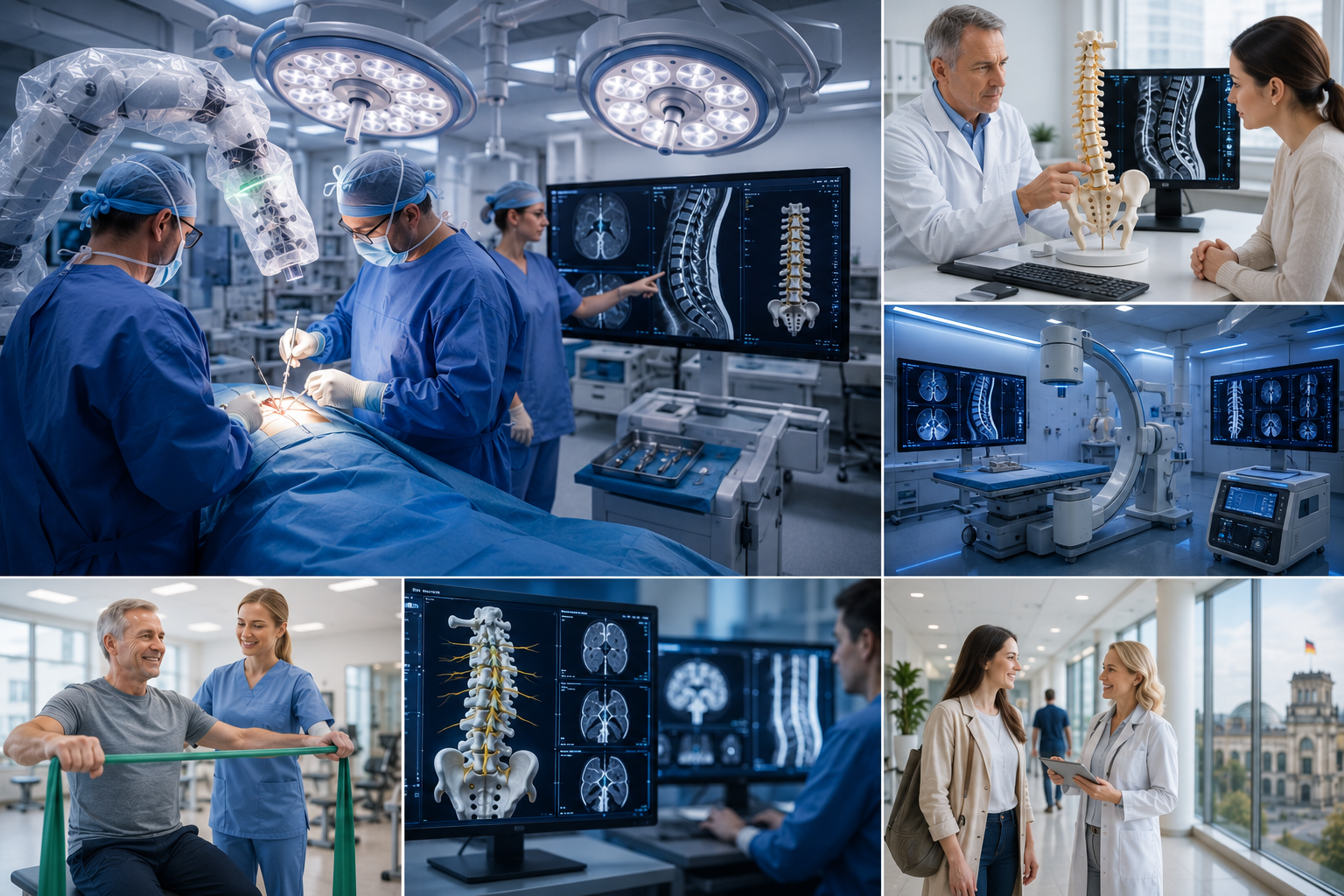
Germany is one of the world’s leading destinations for spinal surgery and neurosurgical care.
International patients benefit from:
- Highly experienced spine surgeons and neurosurgeons
- Specialized spine centers
- Advanced minimally invasive technologies
- High-resolution imaging and diagnostics
- Modern operating rooms
- Personalized treatment plans
- Comprehensive rehabilitation programs
- Internationally recognized standards of patient safety
German hospitals combine surgical precision with multidisciplinary care to achieve excellent clinical outcomes.
Recovery After Lumbar Herniated Disc Surgery
Recovery varies depending on the surgical technique and the patient’s overall health.
Many patients experience immediate improvement in leg pain following surgery, while nerve recovery may continue over several weeks or months.
Postoperative rehabilitation may include:
Most patients can resume light daily activities relatively quickly under medical guidance
Expected Outcomes of Lumbar Herniated Disc Surgery
For appropriately selected patients, surgery can provide significant and lasting symptom relief.
Potential benefits include:
Early treatment of severe nerve compression may help prevent permanent neurological damage.
Lumbar Herniated Disc Surgery in Germany with WEGOVITA
WEGOVITA provides international patients with direct access to Germany’s leading spine surgeons, neurosurgical departments, and specialized spinal centers. Our team manages every aspect of the treatment process, including medical record review, specialist consultations, hospital coordination, travel assistance, medical translation, and long-term follow-up care.
Through partnerships with Germany’s most respected spine experts, WEGOVITA ensures that patients receive individualized treatment plans and access to the latest advancements in lumbar herniated disc surgery.


