

What Is Cervical Spinal Stenosis?
Cervical spinal stenosis is a condition in which the spinal canal in the neck (cervical spine) becomes narrowed, placing pressure on the spinal cord and surrounding nerves. As the compression increases, patients may experience neck pain, arm symptoms, balance problems, loss of dexterity, and in severe cases, spinal cord dysfunction known as cervical myelopathy.
Because the cervical spine protects the spinal cord, untreated stenosis can lead to progressive neurological damage. Early diagnosis and timely treatment are essential to prevent permanent complications and preserve quality of life.
At WEGOVITA, international patients have access to Germany’s leading spinal surgeons, neurosurgeons, and specialized spine centers that provide advanced surgical treatment for cervical spinal stenosis using state-of-the-art technologies and minimally invasive techniques whenever appropriate.

Causes of Cervical Spinal Stenosis
Cervical spinal stenosis commonly develops as a result of age-related degeneration of the spine. Over time, structural changes can reduce the available space for the spinal cord and nerve roots.
Common causes include:
These changes may occur gradually, causing symptoms that worsen over months or years.
Symptoms of Cervical Spinal Stenosis
The symptoms depend on whether nerves, the spinal cord, or both are being compressed.
Common symptoms include:
Cervical Myelopathy
When the spinal cord itself becomes compressed, patients may develop cervical myelopathy, a serious neurological condition that can progressively impair movement and function.
Symptoms of cervical myelopathy may include:
Because cervical myelopathy can become irreversible, surgical treatment is often recommended once significant spinal cord compression is confirmed.

When Is Surgery Recommended?
While mild cervical spinal stenosis may initially be managed conservatively, surgery is often the most effective treatment when spinal cord compression is present.
Surgery may be recommended when:
- Symptoms continue despite conservative treatment
- Arm pain significantly affects daily life
- Weakness develops in the arms or hands
- Balance problems become noticeable
- MRI confirms spinal cord compression
- Cervical myelopathy is diagnosed
- Neurological symptoms continue to worsen
The primary goal of surgery is to relieve pressure on the spinal cord and nerves while preserving or restoring neurological function.
Diagnostic Evaluation Before Surgery
German spine specialists perform a comprehensive evaluation to determine the most appropriate surgical strategy.
Diagnostic assessment may include:
Magnetic Resonance Imaging (MRI)
MRI is the most important diagnostic tool for cervical spinal stenosis. It provides detailed visualization of:
- Spinal cord compression
- Herniated discs
- Degenerative changes
- Nerve root involvement
- Spinal canal narrowing
Computed Tomography (CT)
CT scans help evaluate bony structures and are particularly useful for surgical planning.
Neurological Examination
Specialists assess:
- Muscle strength
- Sensory function
- Reflexes
- Balance
- Coordination
- Walking ability
This detailed assessment helps determine the severity of spinal cord involvement and the urgency of treatment.
Surgical Treatment Options for Cervical Spinal Stenosis
Germany is internationally recognized for advanced cervical spine surgery and offers highly individualized treatment plans tailored to each patient’s condition.
Anterior Cervical Discectomy and Fusion (ACDF)
ACDF is one of the most commonly performed procedures for cervical spinal stenosis.
Through a small incision in the front of the neck, the surgeon removes the damaged disc and any structures compressing the spinal cord or nerves. The affected spinal segment is then stabilized using a cage and, when necessary, a plate.
Benefits include:
- Effective spinal cord decompression
- Relief of arm pain and neurological symptoms
- Excellent long-term stability
- High success rates
Posterior Cervical Decompression
When multiple levels of the cervical spine are affected, surgeons may recommend a posterior approach.
Procedures may include:
- Cervical laminectomy
- Laminoplasty
- Posterior decompression with fusion
These techniques create additional space for the spinal cord and relieve extensive compression.
Cervical Disc Replacement
Selected patients may qualify for cervical disc replacement, a motion-preserving procedure that removes the diseased disc while maintaining movement at the treated level.
Potential advantages include:
- Preservation of neck mobility
- Reduced stress on adjacent spinal segments
- Faster return to daily activities
German spine specialists carefully evaluate whether a patient is a suitable candidate for this advanced procedure.
Minimally Invasive Cervical Spine Surgery
Many German centers offer minimally invasive cervical procedures whenever clinically appropriate.
Potential benefits include:
- Smaller incisions
- Reduced muscle damage
- Less postoperative pain
- Faster recovery
- Shorter hospitalization
The choice of technique depends on the location and severity of stenosis.
Why Choose Germany for Cervical Spinal Stenosis Surgery?
Germany is among the world’s leading destinations for complex spinal surgery.
- International patients benefit from:
- Highly specialized spine surgeons and neurosurgeons
- Advanced spinal cord monitoring technologies
- State-of-the-art imaging and surgical navigation systems
- Expertise in minimally invasive and motion-preserving procedures
- Multidisciplinary treatment planning
- Internationally recognized university hospitals
- Comprehensive rehabilitation programs
- German spine centers are known for combining surgical precision with individualized patient care to achieve optimal outcomes.
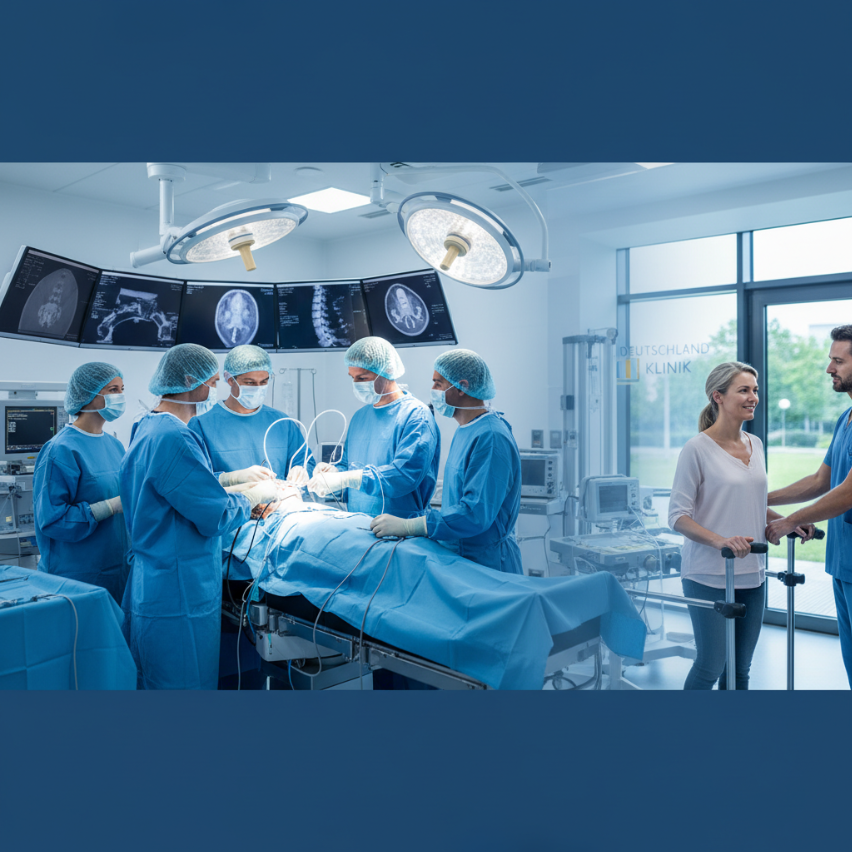
Recovery After Cervical Spine Surgery
Recovery varies depending on the severity of compression and the surgical procedure performed.
Many patients notice significant improvement in arm pain shortly after surgery, while neurological recovery may continue for several months.
Recovery programs may include:
- Physiotherapy
- Strength and mobility training
- Postural rehabilitation
- Neurological monitoring
- Personalized follow-up care
Early treatment often leads to better neurological recovery and improved long-term outcomes.
Expected Outcomes of Cervical Spinal Stenosis Surgery
For appropriately selected patients, cervical spinal stenosis surgery can significantly improve quality of life.
Potential benefits include:
- Relief of neck and arm pain
- Reduced numbness and tingling
- Improved hand function and dexterity
- Better balance and walking ability
- Prevention of further spinal cord damage
- Enhanced independence and daily functioning
The earlier spinal cord compression is treated, the greater the likelihood of preserving neurological function.
Cervical Spinal Stenosis Surgery in Germany with WEGOVITA
WEGOVITA provides international patients with direct access to Germany’s leading spine surgeons, neurosurgical departments, and specialized spinal centers. Our team manages every aspect of the treatment journey, including medical case review, specialist selection, hospital coordination, travel assistance, medical translation, and long-term follow-up.
Through partnerships with top German hospitals and spine experts, WEGOVITA helps patients receive world-class surgical care for cervical spinal stenosis, ensuring personalized treatment plans and access to the latest advancements in spinal surgery.


